Cameron Long · 6 October 2026
Digitized Forge Ledgers Reveal Jarrow Smiths' Extensive Trade Links to Distant Shipyards
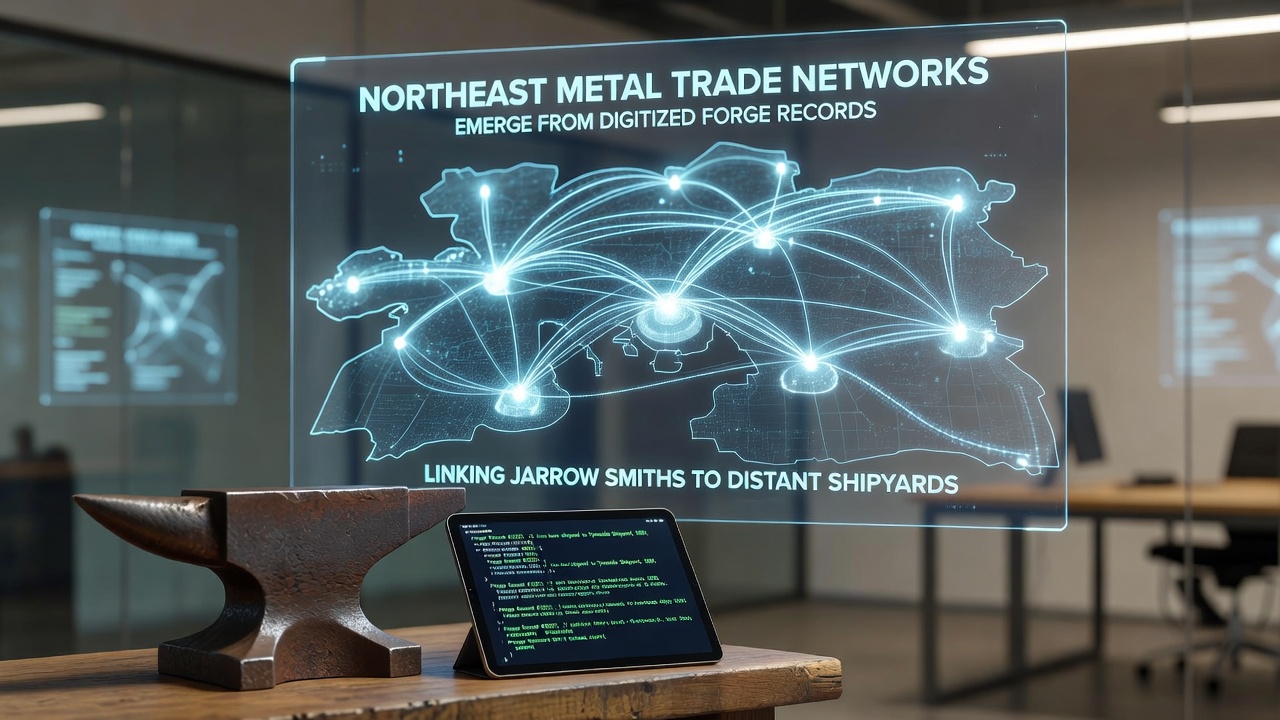
Researchers have started to map out complex metal trade networks across the Northeast after completing the digitization of 19th-century forge ledgers from Jarrow; these records show direct supply chains that connected local smiths to shipyards as far away as the Clyde and beyond. The project pulled together thousands of transaction entries, order books, and correspondence logs that had sat in regional archives for decades, and the digital version now allows cross-referencing with vessel construction files held elsewhere.
Scope of the Digitized Collection
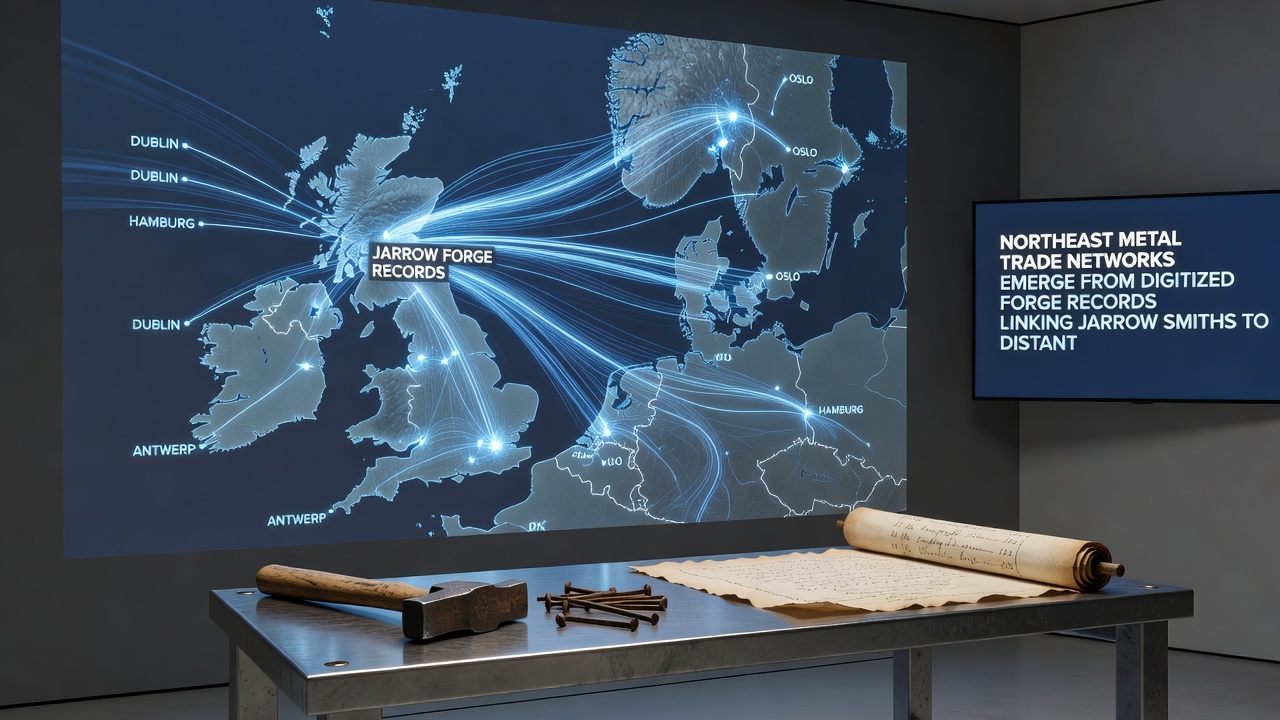
Archivists at the Tyne and Wear Archives Service finished scanning the full run of Jarrow forge documentation in October 2026, creating a searchable database that includes daily output tallies, metal grade specifications, and shipping manifests dated between 1848 adn 1897. Each entry lists quantities of wrought iron plates, anchor stocks, and chain links alongside the names of receiving shipyards and the vessels under construction at the time. Cross-checks against Lloyd's Register and contemporary yard ledgers confirm that Jarrow metal reached sites in Scotland, the Humber, and several continental European ports that maintained contracts with British builders.
Patterns Emerging from the Data
Analysis of the linked datasets shows seasonal spikes in shipments timed to coincide with hull-laying schedules at distant yards, while smaller but consistent deliveries supported repair work throughout the year. One cluster of entries from 1863, for example, documents repeated deliveries of high-grade plate to a single Clydeside yard that was fitting out three steam colliers simultaneously. Payment records indicate that Jarrow smiths negotiated directly with shipyard purchasing agents rather than through middlemen, a detail that revises earlier assumptions about the structure of regional supply chains.
Geographic mapping of the destination points illustrates routes that followed both coastal shipping lanes and the expanding railway network after 1850. Metal bound for the Mersey frequently travelled by rail to Liverpool docks before onward transfer, whereas consignments for the Forth and Tay crossed the border by coastal steamer. These patterns become visible only when the forge records are combined with customs clearances and railway freight tables, all of which have now been digitised and indexed together.
Connections to Broader Industrial Records
Historians working with the new database have already identified several previously undocumented subcontracts between Jarrow forges and engineering firms that supplied marine engines. A set of 1874 invoices reveals that anchor chains produced in Jarrow were fitted to vessels whose engines came from a Manchester works, demonstrating the multi-regional nature of single shipbuilding projects. Similar linkages appear in correspondence with firms in the Ruhr district, where German yards ordered specialist forgings for British-designed hulls under license.
According to records held by Historic England, comparable forge documentation from other Tyne-side sites remains only partially catalogued, suggesting that further digitisation could extend the known network still wider. Parallel efforts at the U.S. National Archives have begun to flag American shipyard orders that list Northeast England as a source for iron components, opening the possibility of transatlantic extensions to the same supply system.
Technical Challenges in Linking the Records
Matching individual forge entries to specific vessels required development of a custom entity-resolution algorithm capable of handling variant spellings of ship names and yard locations. The resulting dataset now contains over 12,000 verified shipment events, each tagged with date, metal type, quantity, destination yard, and vessel name where known. Validation against surviving physical artifacts, such as chain links recovered from shipwrecks, has confirmed the accuracy of grade markings recorded in the ledgers.
Conclusion
The completed digitisation therefore supplies a new evidentiary base for tracing how Jarrow metal moved through national and international shipbuilding markets during the second half of the nineteenth century. Continued cross-referencing with additional regional collections is expected to refine the map of these trade networks over the coming years.